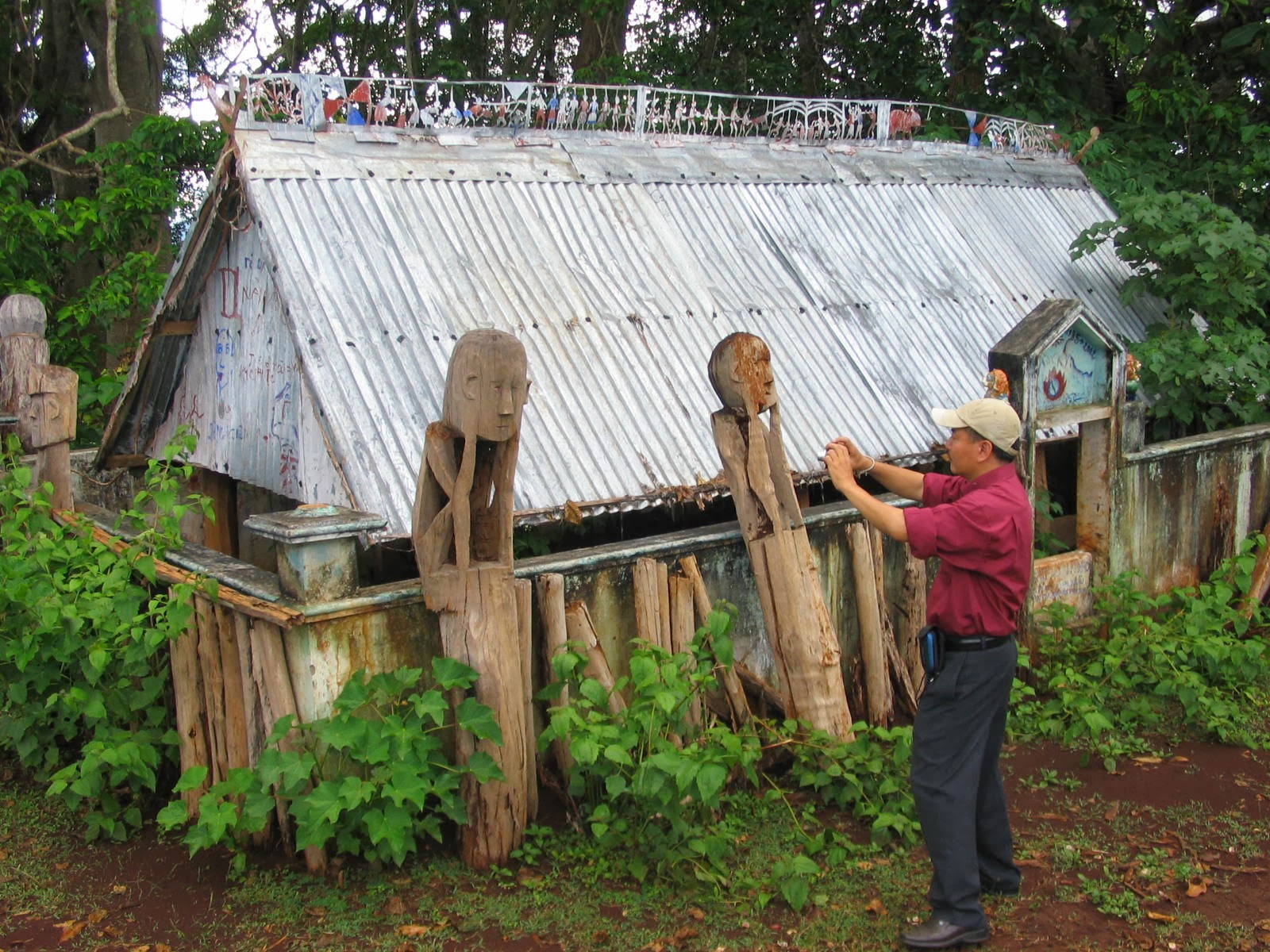
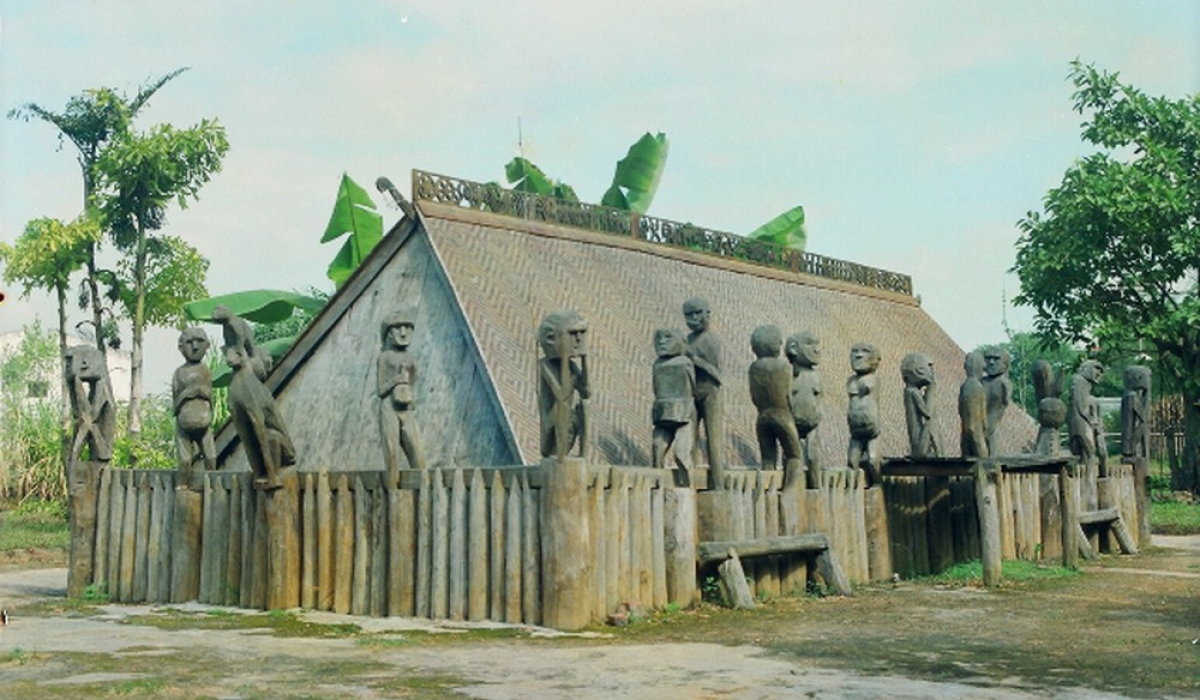
Location: Tay Nguyen Grave House is located in the Central Highlands, Kon Tum Province.
Characteristics: According to aged old customs of ethnic minority groups in the Central Highlands, after the burial of the deceased they grave to shelter the grave from rain and sunshine.
The hut is usually stocked with personal belongings of the deceased. Two or three years later, family members of the deceased are going to remove the hut and build a new, bigger wooden house there. In addition, the grave is to have meticulous decorations. The grave house is surrounded with a wooden fence within there is a wooden statue resembling a human being, a bird or an animal. The practice of removing the makeshift hut is usually organized in the spring and is considered a festive day. The ritual is called Le Bo Ma (Leaving-the-grave). In this day villagers are gathered at the cemetery ground and the family members bring food offerings including rice-distilled rice, rice, cooked pork and other meat. After the offerings are given to the deceased, villagers are to sing songs, dance and enjoy the drink and the food taken down from the altar. They have the belief that the deceased has returned to join the feast with those alive.
 Latest News
01/05/2026
When travelers think of Vietnam, names like Hanoi, Halong Bay, Hoi An, or Ho Chi Minh City often come to mind. These iconic destinations are popular for good reason. However, beyond the well-trodden routes lies another Vietnam — quieter, more authentic, and deeply connected to nature and local culture. For travelers who have already visited Vietnam or those seeking meaningful, off-the-beaten-path experiences, the country offers many lesser-known destinations that remain largely untouched by mass tourism. Here are some of Vietnam’s hidden gems worth discovering.
12/04/2025
Vietnam Airlines announced that starting May 17, 2025, all its domestic flight operations will be relocated to the newly opened Terminal T3 at Tan Son Nhat International Airport.
11/07/2025
In Vietnam, coffee is not merely a drink - it is a way of experiencing life. It is conversation, stillness, memory, rhythm, and a quite ritual that unfolds throughout the day. From the shaded sidewalks of Hanoi to the breezy riverside cafe in Saigon, coffee in Vietnam reflects the character of each region: refined, poetic, bold, and deeply personal. To travel through Vietnam is to follow the aroma of roasted beans, the whisper of coffee filters dripping slowly, and the soft clinking of glasses in morning life. Featured Tours