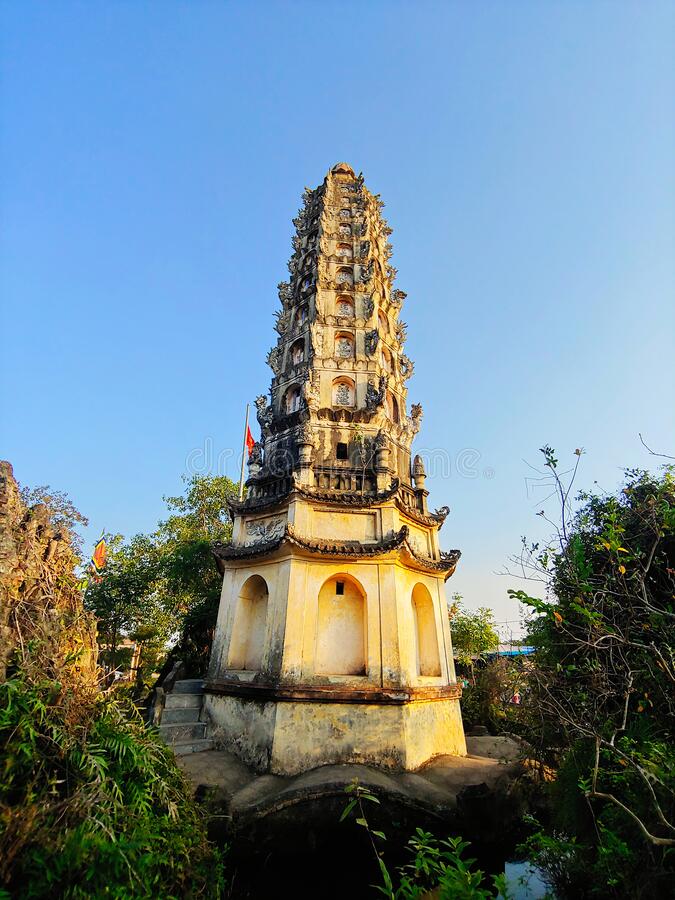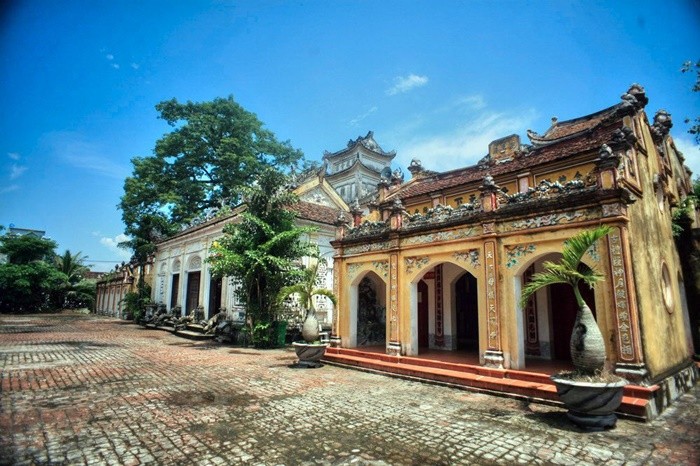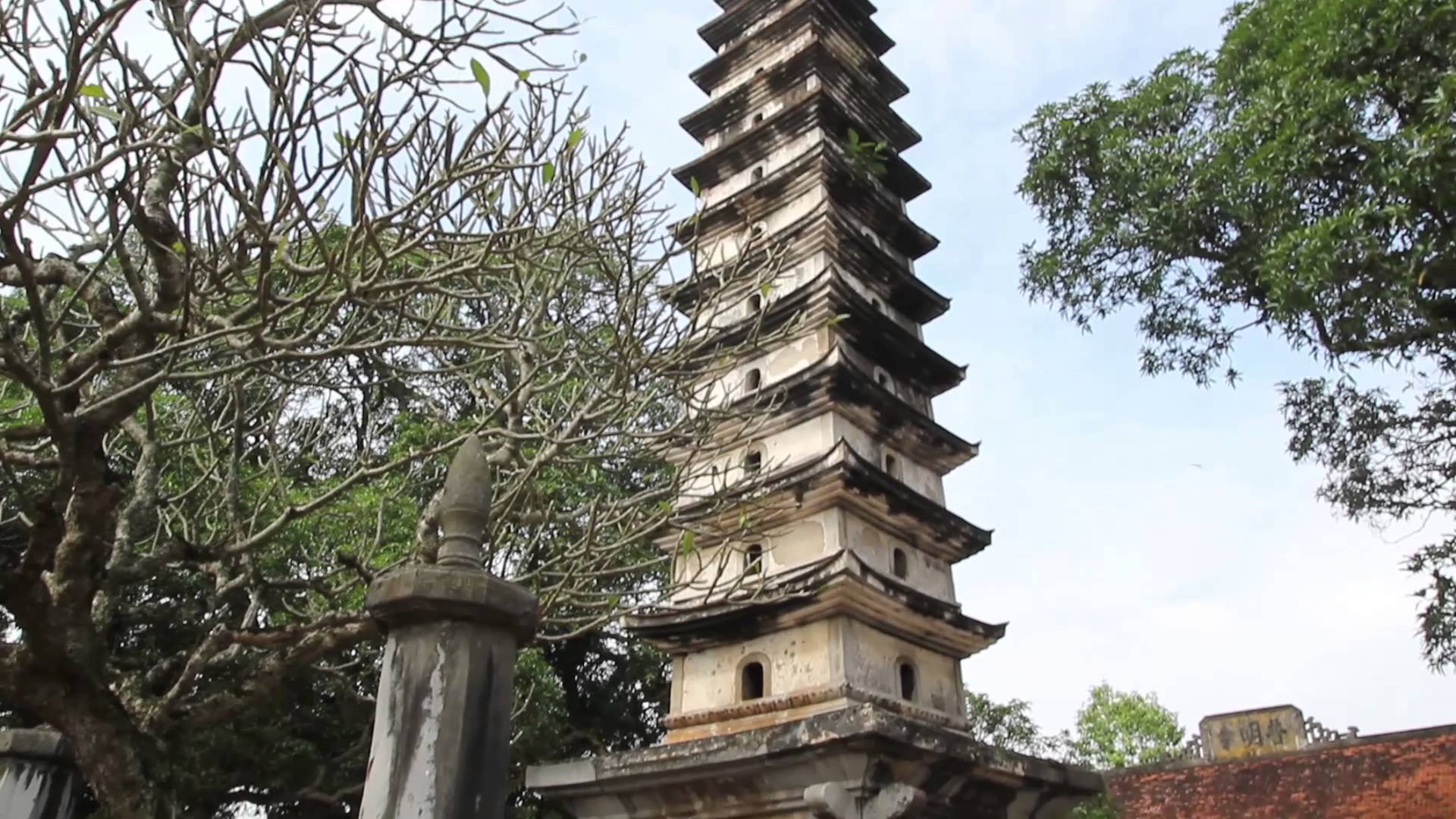
Location: Located in Co Le Townlet, Truc Ninh District, Nam Dinh Province.
Characteristics: It is said that Co Le Pagoda was built by Buddhist Monk Nguyen Minh Khong during the Ly dynasty.
From Nam Dinh, cross the hanging bridge over the Dao River, then take Highway 21 for 15km to Co Le. Finally, cross the small bridge and turn right. Co Le Pagoda is 200m away.
Buddhist Monk Pham Quang Tuyen rebuilt the existing Co Le Pagoda in November 1920. In front of the pagoda is the 12-storey Cuu Pham Lien Hoa Tower built in 1926. The octagonal base of the tower sits on the back of a turtle facing the pagoda. In the tower, there is a huge staircase spiraling to the top of the tower. From the top, there is a panoramic view of the entire area.
A bridge leads to Phat Giao Hoi Quan, a Buddhist meeting place, built in 1936. In addition to this bridge, the main pagoda can be reached by two other bridges in the mountains. In the center of the pagoda is a large 9,000-kg bell moulded in 1936. In the upper temple is the statue of Thich Ca Buddha; it is made of red lacquer trimmed with gold.
Several rare relics, such as a great red bell and bronze drums dating from the Ly dynasty, are kept in this pagoda.
 Latest News
01/05/2026
When travelers think of Vietnam, names like Hanoi, Halong Bay, Hoi An, or Ho Chi Minh City often come to mind. These iconic destinations are popular for good reason. However, beyond the well-trodden routes lies another Vietnam — quieter, more authentic, and deeply connected to nature and local culture. For travelers who have already visited Vietnam or those seeking meaningful, off-the-beaten-path experiences, the country offers many lesser-known destinations that remain largely untouched by mass tourism. Here are some of Vietnam’s hidden gems worth discovering.
12/04/2025
Vietnam Airlines announced that starting May 17, 2025, all its domestic flight operations will be relocated to the newly opened Terminal T3 at Tan Son Nhat International Airport.
11/07/2025
In Vietnam, coffee is not merely a drink - it is a way of experiencing life. It is conversation, stillness, memory, rhythm, and a quite ritual that unfolds throughout the day. From the shaded sidewalks of Hanoi to the breezy riverside cafe in Saigon, coffee in Vietnam reflects the character of each region: refined, poetic, bold, and deeply personal. To travel through Vietnam is to follow the aroma of roasted beans, the whisper of coffee filters dripping slowly, and the soft clinking of glasses in morning life. Featured Tours